


 English
 русский
 Español
 عربى
عربى 中文简体
中文简体
News
Home / News / Industry news / ADSS vs. OPGW: Comparing Two Major Fiber Optic Solutions for Overhead Networks

Content
Overhead fiber optic networks depend on cables that can endure extreme weather, high mechanical loads, and the electromagnetic challenges of power line environments. Two cable types have emerged as the dominant solutions: ADSS (All-Dielectric Self-Supporting) cable and OPGW (Optical Ground Wire). While both deliver high-speed fiber optic communication along overhead power corridors, they are engineered for fundamentally different conditions and project types. Understanding their distinctions is essential before committing to either solution.
All Dielectric Self Supporting (ADSS) Cable is a fully non-metallic fiber optic cable designed to be strung between utility poles or transmission towers without any additional messenger wire or support structure. The absence of metal in its construction makes it immune to electrical interference, which is why it can be safely installed in close proximity to energized power conductors.
Optical Ground Wire (OPGW) is a hybrid cable that performs two functions simultaneously: it acts as the overhead earth/shield wire on a high-voltage transmission line while housing optical fibers for data communication. It physically replaces the traditional static wire at the top of transmission towers, integrating grounding capability and fiber optic transmission into a single cable.
Both cable types make use of existing power line infrastructure, eliminating the need to build dedicated communication towers and reducing construction costs significantly compared to traditional aerial fiber deployments. Despite this shared advantage, their internal structures, installation requirements, and optimal use cases differ considerably.
The internal architecture of ADSS and OPGW reflects their very different design philosophies.
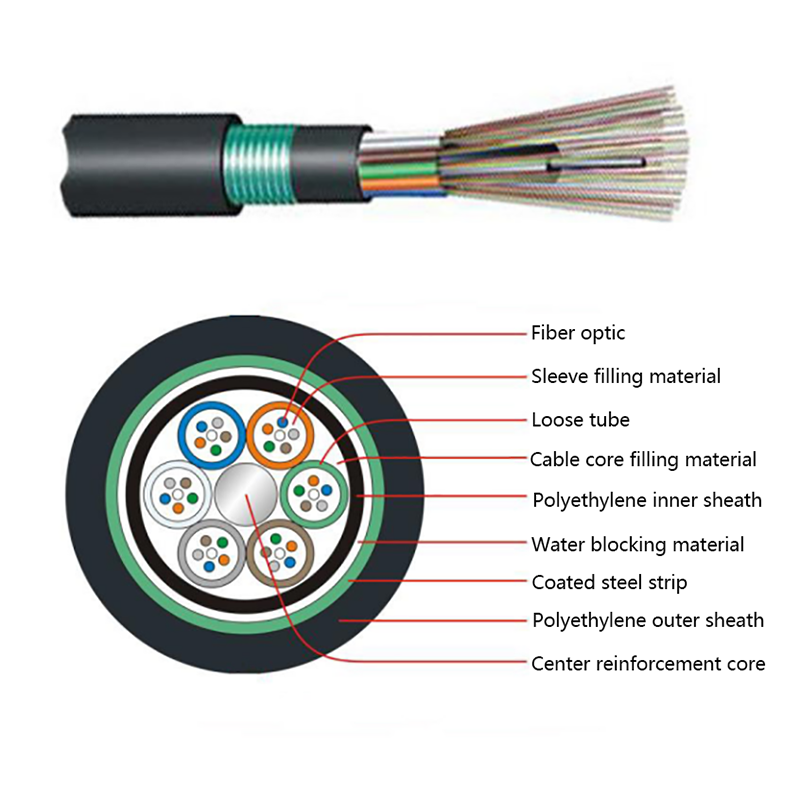
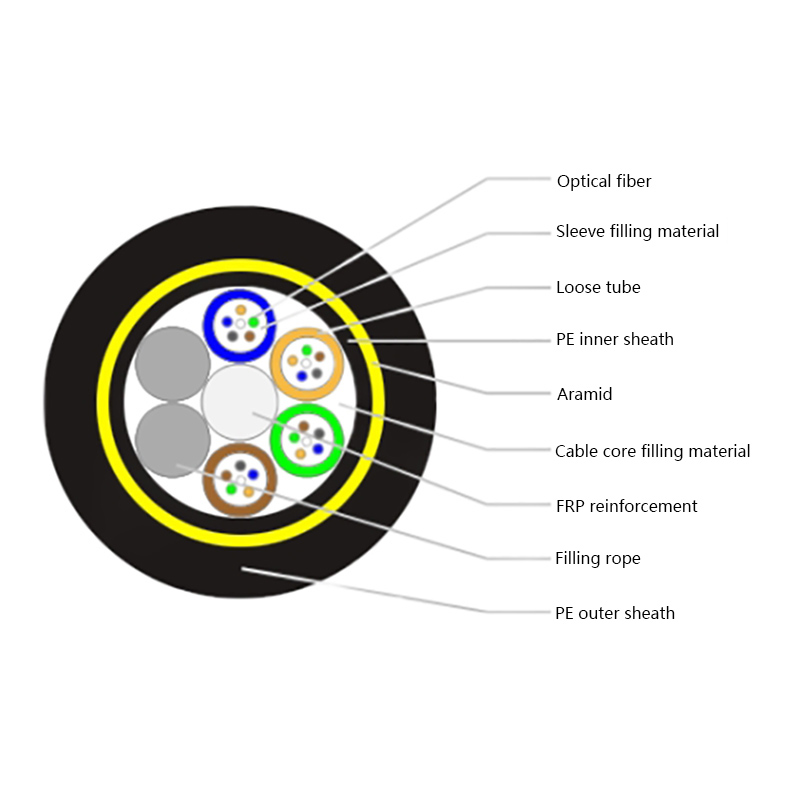
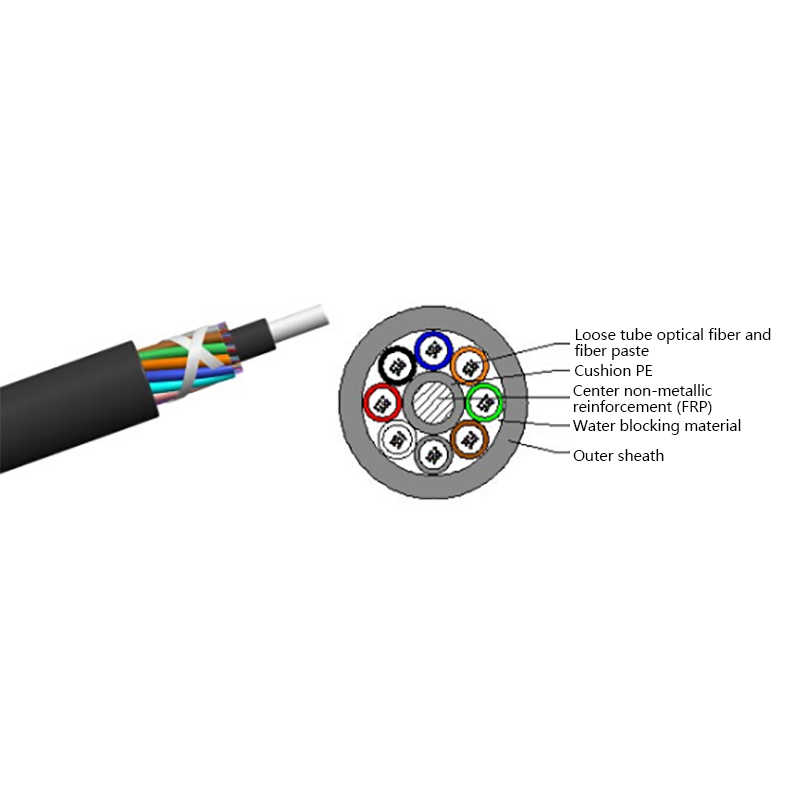
ADSS cable is built around a central strength member—typically a fiberglass rod—surrounded by stranded loose buffer tubes, each containing multiple optical fibers embedded in gel. Aramid yarn (such as Kevlar) wraps the core as the primary load-bearing element, providing the tensile strength required for long aerial spans. An outer HDPE or AT (anti-tracking) jacket completes the structure. There is no metal anywhere in the cable. ADSS designs come in two main configurations: central tube (suited for shorter spans up to approximately 500 m) and layer-stranded (preferred for longer spans up to 1,500 m or more).
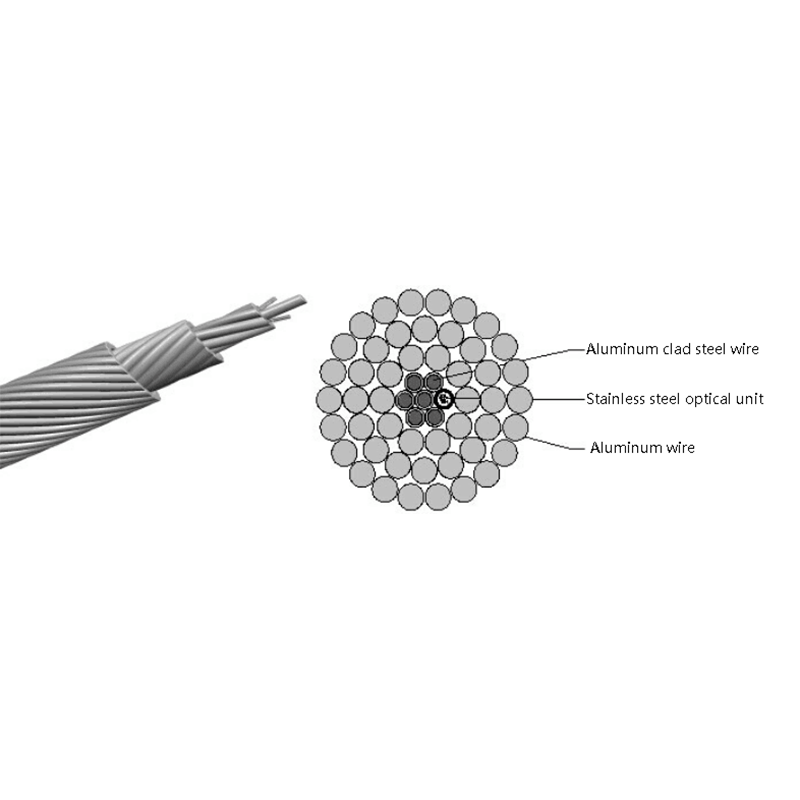
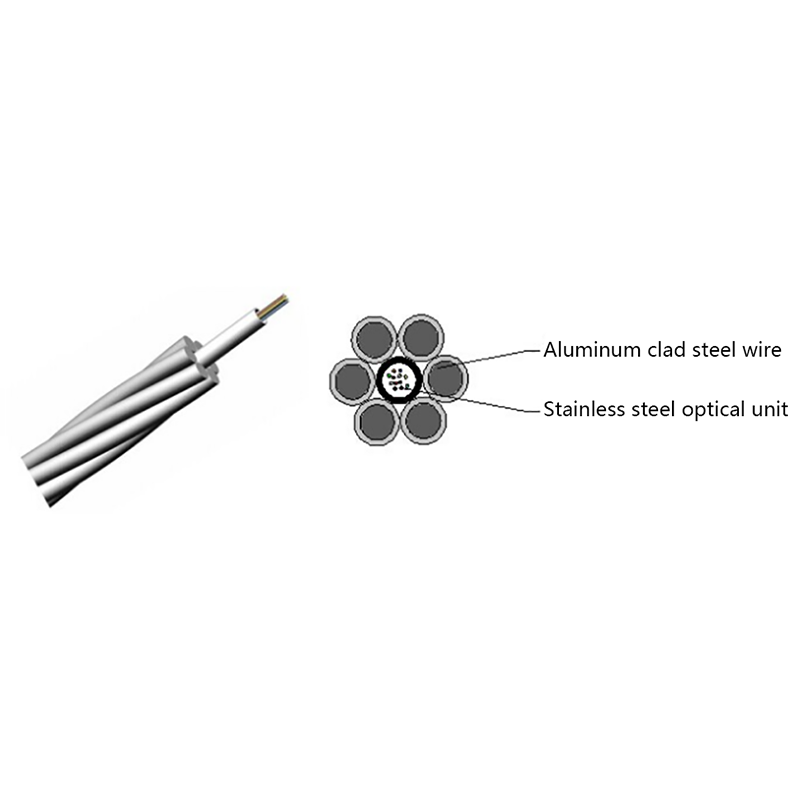
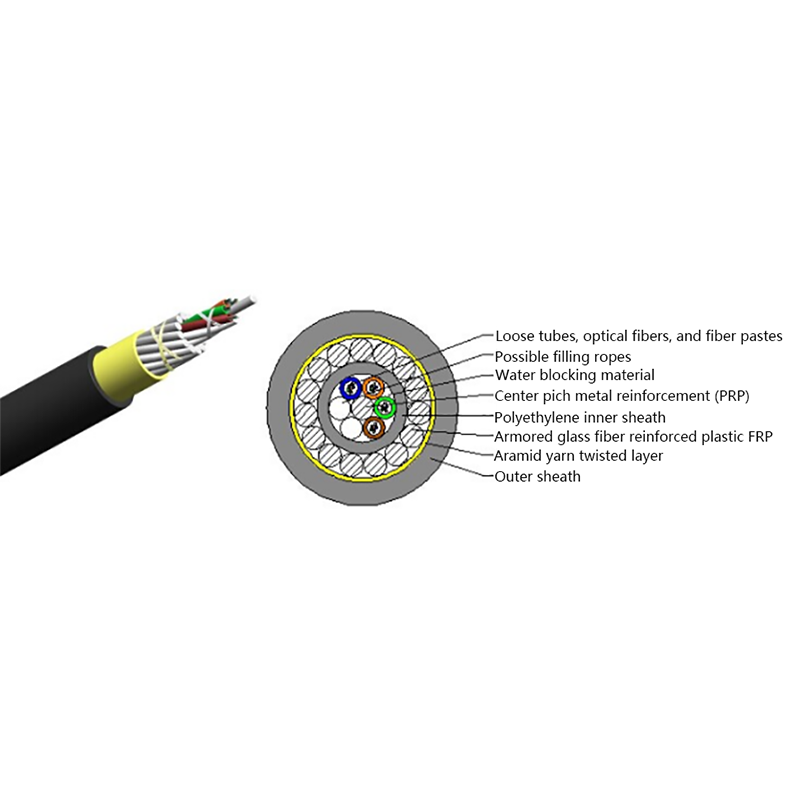
OPGW cable, by contrast, integrates metal and fiber in a concentric arrangement. The optical fibers are housed in one or more stainless steel or aluminum tubes positioned at or near the cable's center. Surrounding layers consist of aluminum-clad steel (ACS) or aluminum alloy wires that provide both the mechanical strength to handle long transmission-line spans and the electrical conductivity needed to carry fault currents safely to ground. A precisely engineered cross-section balances the cable's electrical performance, mechanical properties, and thermal stability under fault conditions.
Electrical behavior is one of the most critical differentiators between the two cable types.
Because ADSS contains no conductive components, it carries no electrical potential and presents no shock hazard to maintenance crews. It is completely unaffected by electromagnetic fields generated by nearby power conductors. However, in very high-voltage environments (typically above 110 kV), induced electric fields can cause surface tracking on the outer jacket over time. Cables installed in such environments require a specially formulated AT (anti-tracking) sheath to resist this degradation.
OPGW, being a metallic cable, must be properly bonded and grounded at each tower. It provides direct lightning protection by intercepting strikes and conducting the resulting fault current safely to earth, shielding the phase conductors below. This grounding function is the reason OPGW is installed at the very top of transmission towers. Its metallic structure means it must always be de-energized and grounded before any maintenance work can begin, making live-line installation impossible without specialized equipment and procedures.
The conditions under which each cable can be installed represent one of the most practically significant differences for project planners.
ADSS cable is attached to the side of existing transmission towers or distribution poles using dedicated hardware such as suspension clamps and tension clamps. Because it carries no electrical energy, it can be installed on an energized line without a power outage—a major advantage for utilities that cannot afford downtime. Installation crews string it between poles much like any self-supporting messenger cable. Its light weight reduces the structural load imposed on towers, which is an important consideration when adding cables to aging infrastructure.
OPGW installation is more complex. Since it replaces the existing overhead earth wire, the old ground wire must be removed as the new OPGW is pulled in—an operation that requires the transmission line to be de-energized and grounded, or conducted using specialized live-line techniques. This makes OPGW the natural choice for new transmission line construction, where no existing ground wire is present and no outage is required. Retrofitting an existing energized line with OPGW is logistically challenging and considerably more expensive.
Each cable type is aligned with a distinct set of project scenarios and industries.
ADSS cable is widely deployed by telecommunications operators, power distribution utilities, and private network operators across a broad range of environments. Common applications include:
OPGW is predominantly used by power utilities on high-voltage and extra-high-voltage transmission systems. Its applications include:
Cost comparisons between ADSS and OPGW must account for both upfront investment and long-term operational factors.
ADSS cable generally has a lower initial material cost than OPGW. Its all-dielectric construction uses no precious metals, and installation does not require power outages, which significantly reduces project-related costs. Maintenance is relatively straightforward—visual inspection and hardware checks can typically be performed without de-energizing the line.
OPGW involves higher upfront costs due to the complexity of its hybrid metallic-optical structure and the need to remove and replace existing ground wire during installation. However, for new transmission line projects, OPGW delivers compelling value because a single cable simultaneously fulfills the mandatory grounding function and the communication function, replacing two separate systems. Over the life of a high-voltage transmission project, this dual-purpose efficiency can offset the higher initial investment.
Maintenance of OPGW requires greater care. Any repair work on the cable necessitates grounding protocols, and fiber splicing in the field must account for the cable's metallic components. Splice closures and hardware must be rated for the electrical environment of the transmission tower.
The right choice depends primarily on three factors: the voltage level of the line, whether the project is new construction or a retrofit, and whether the cable must serve a grounding function. The table below summarizes the key decision points.
| Factor | ADSS | OPGW |
|---|---|---|
| Typical voltage range | 10 kV – 110 kV (with AT sheath for higher voltages) | 110 kV and above |
| Best for new construction? | Yes, but ground wire still required separately | Yes — replaces ground wire |
| Best for existing line retrofit? | Yes — no power outage needed | Difficult — requires line outage |
| Lightning/grounding function | No | Yes |
| Metal-free construction | Yes | No |
| Typical span range | 50 m – 1,500 m | 200 m – 600 m (standard) |
| Relative material cost | Lower | Higher |
| Live-line installation | Yes | Generally no |
As a general rule: choose OPGW when building new high-voltage transmission infrastructure where a ground wire is required anyway, and the dual-purpose cable will deliver the best total value. Choose ADSS when upgrading or adding communication capacity to an existing energized line, particularly at distribution voltages, where a power outage is impractical and no structural changes to the towers are desired.
For projects that span both scenarios—such as a utility expanding its fiber backbone across mixed new and legacy infrastructure—a combination approach using OPGW on new high-voltage segments and ADSS on existing distribution sections is a well-established practice. To explore specific product configurations for either cable type, visit our OPGW product page or contact our engineering team for a project-specific recommendation.

Request for a call today

 Login
Custom Optical Cables Manufacturers
Login
Custom Optical Cables Manufacturers