


 English
 русский
 Español
 عربى
عربى 中文简体
中文简体
News
Home / News / Industry news / Fiber Optic Cable vs Copper Wire: Performance, Cost and Selection Guide

Content
A campus network manager faces a common decision: two buildings stand 800 meters apart, and the upgrade plan calls for a dependable 10 Gbps link between them. Copper Ethernet cannot cross that distance in one run — Category 6A tops out at 100 meters — so the copper approach would need a powered intermediate cabinet, extra switches and duplicated electronics. Single-mode fiber crosses the same span in one unbroken link, with hundreds of times the capacity left in reserve.
Here is the short answer to the fiber optic cable vs copper wire debate: beyond 100 meters, above 10 Gbps, and anywhere near power lines or electrical noise, fiber optic cable is the correct engineering and economic choice. Copper wire still earns its keep indoors for short horizontal runs and for delivering power to devices through Power over Ethernet (PoE). Placing your project on the right side of that line prevents the two most expensive cabling mistakes: overbuilding with fiber where a short copper run is enough, and installing copper where fiber capacity will be demanded within a few years.
Copper wire carries data as electrical voltage through metal conductors, typically twisted pairs of 22–26 AWG wire. Resistance, capacitance and crosstalk all increase as signal frequency climbs, which is why a Category 6A link rated for 10 Gbps is only guaranteed at 100 meters and no further.
Fiber optic cable carries data as pulses of light through a glass core, most commonly 9-micron single-mode fiber built to the ITU-T G.652D standard — the same fiber used across Hawell's outdoor cable range. Light neither radiates outward nor reacts to external electromagnetic fields. Attenuation on modern single-mode fiber is approximately 0.35 dB per kilometer at 1310 nm and roughly 0.2 dB per kilometer at 1550 nm, meaning the signal keeps usable strength across dozens of kilometers while a high-frequency copper signal fades within a single city block.
Construction reflects the physics. A duplex fiber cable is a few millimeters in diameter and light enough to install by hand; a copper bundle of equivalent capacity is far thicker and heavier and consumes much more conduit space — a decisive fiber advantage in the crowded underground ducts of older cities.
The table below condenses the comparison into the specifications that actually drive purchasing decisions.
| Attribute | Copper Wire (Cat5e–Cat6A) | Single-Mode Fiber Optic Cable |
|---|---|---|
| Maximum run without added electronics | 100 m | 10–40 km (10GBASE-LR/ER); further with amplifiers |
| Practical bandwidth | Up to 10 Gbps per link | 100–400 Gbps per channel; DWDM multiplies capacity per fiber pair |
| Attenuation | High at high frequencies | About 0.2–0.35 dB/km |
| Electromagnetic interference | Affected by motors, power lines, lightning | Immune |
| Signal security | Radiates; taps are hard to detect | No emissions; physical taps cause detectable loss |
| Electrical behavior | Conductive; ground loops and lightning risk | Non-conductive glass |
| Power delivery | PoE up to 90 W per port | Not applicable |
| Field termination | RJ45 crimp with common tools | Fusion splicing by trained technicians |
Copper remains the economical choice for short indoor runs, and it does one thing fiber cannot: carry meaningful power to the endpoint device.
For a 30-meter run serving a single workstation, copper is cheaper end to end and faster to install. Fiber becomes the cheaper option the moment distance, bandwidth or environment pushes copper past its limits.
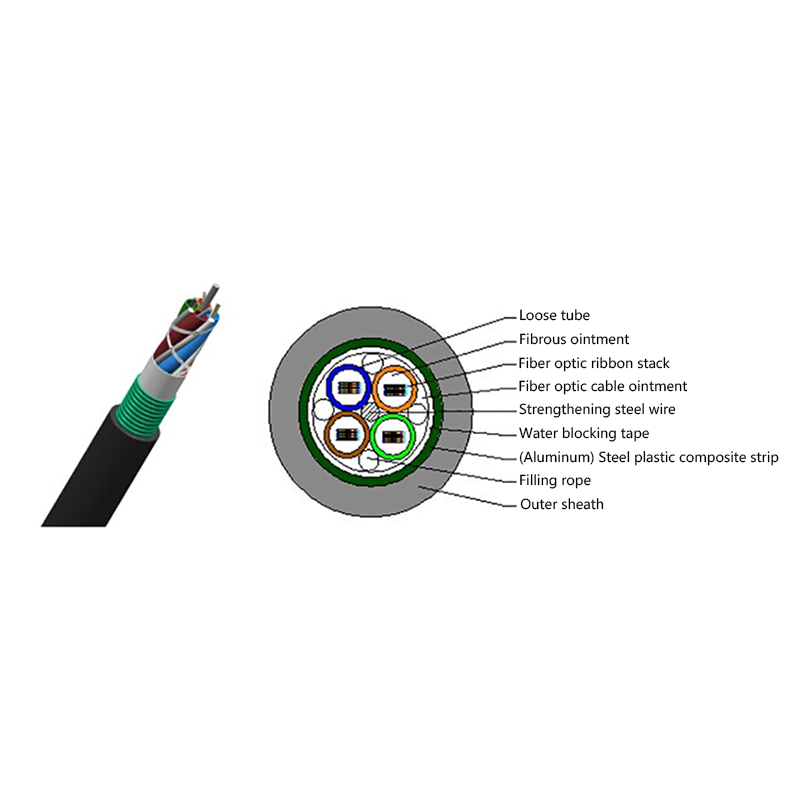
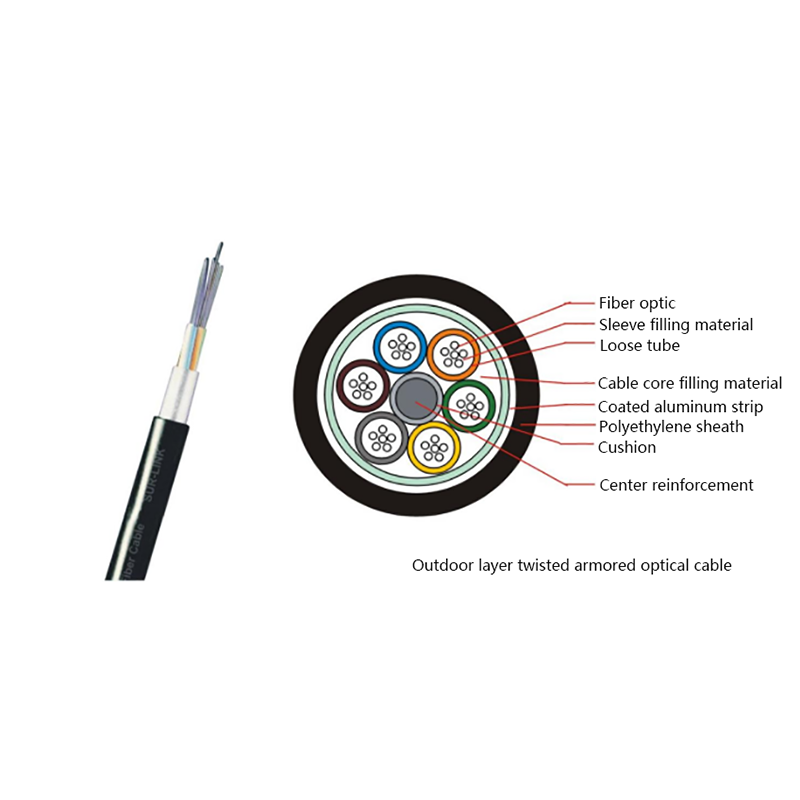
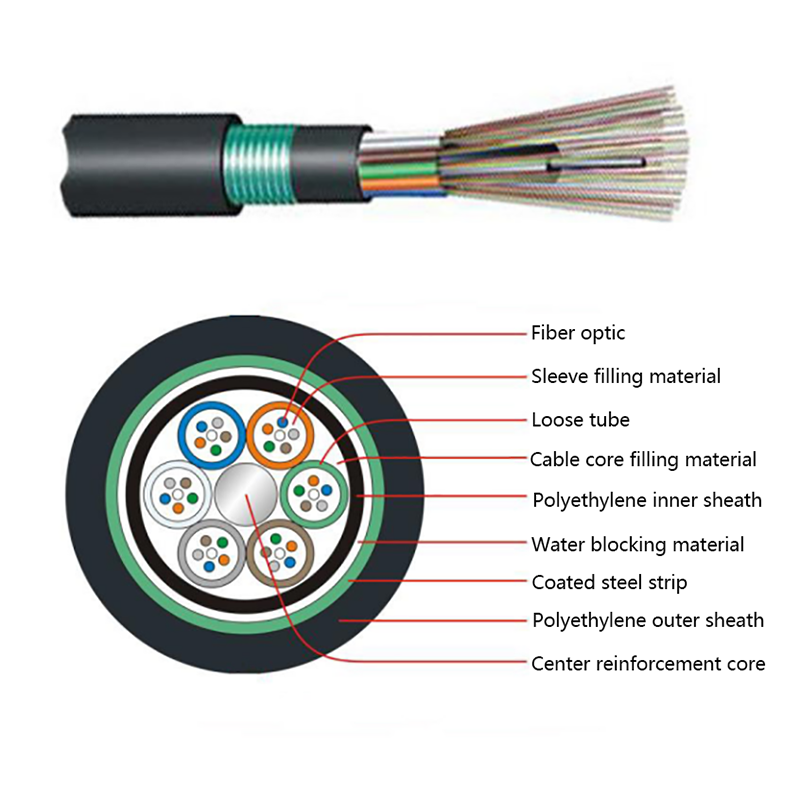
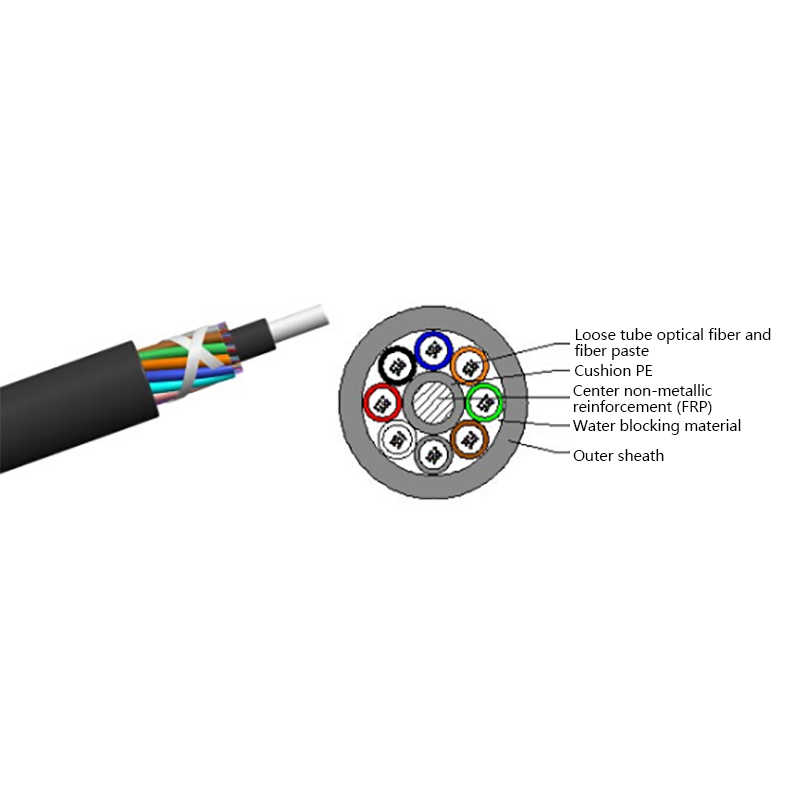
Every serious backbone — campus riser, metro ring, carrier network — runs on fiber for good reason. A single 10GBASE-ER span reaches 40 km without inline electronics, and dense wavelength division multiplexing stacks dozens of 100–400 Gbps channels onto one fiber pair. For direct-burial or duct routes exposed to moisture, rodents and soil movement, armored constructions such as GYTA53 with steel-tape armor and a moisture barrier protect the glass for decades of service.
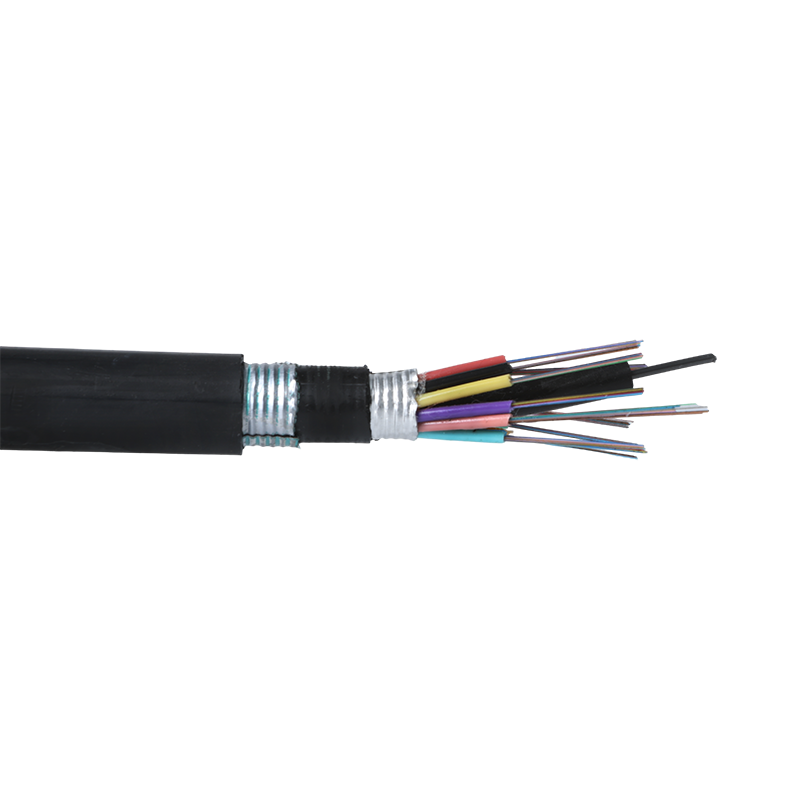 GYTA53 Double-Sheathed Steel-Tape Armored Direct-Burial Fiber CableWith steel-tape armor, moisture-barrier inner sheath and water-blocking compound, this cable suits direct-burial backbone routes exposed to soil, moisture and rodents, delivering durable decades-long service alongside long-haul fiber spans.View Product →
Copper's last-mile weakness is measurable. xDSL over telephone-grade wire manages roughly 1.5 Mbps at 15,000 feet, and even VDSL2 delivers a few hundred Mbps only within a few hundred meters of the street cabinet. A fiber drop reaches the home with 1–10 Gbps of headroom, and flat FTTH butterfly drop cables bend around corners and fasten along walls without complicated hardware, keeping installation quick and tidy.
 GJYXCH Flat FTTH Fiber Drop CableAfter comparing copper's limited last-mile reach, this flexible butterfly drop cable brings 1–10 Gbps fiber to the home, with parallel FRP or steel reinforcements, bend-resistant fiber and a groove design for fast, tidy installation.View Product →
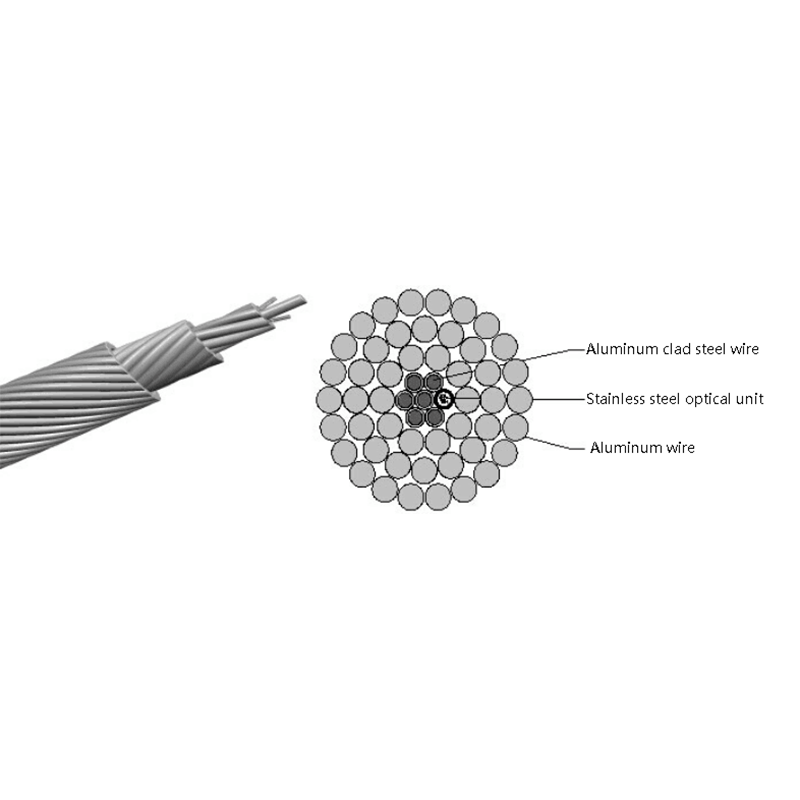
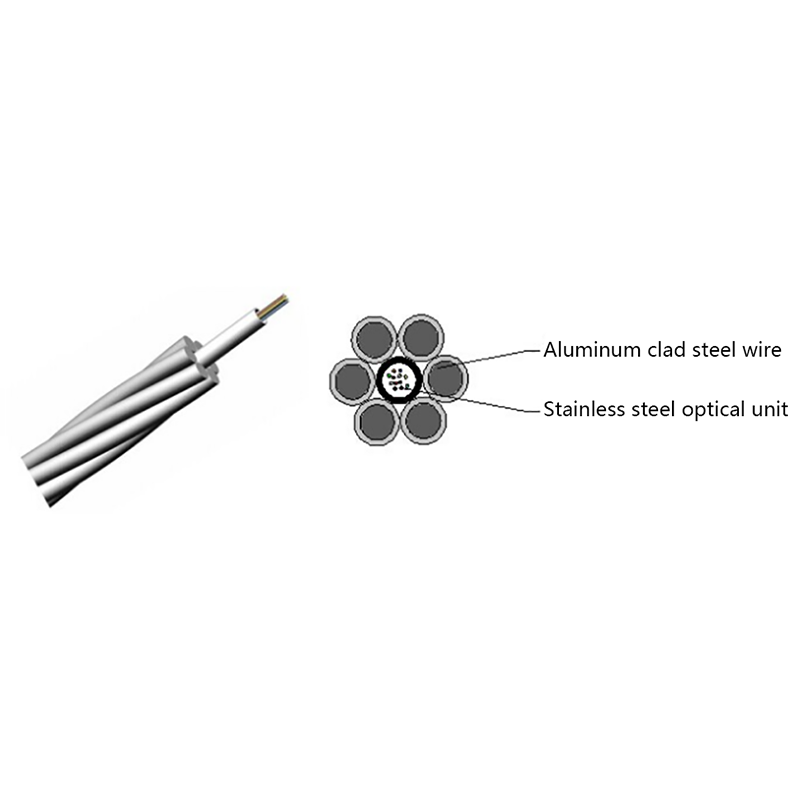
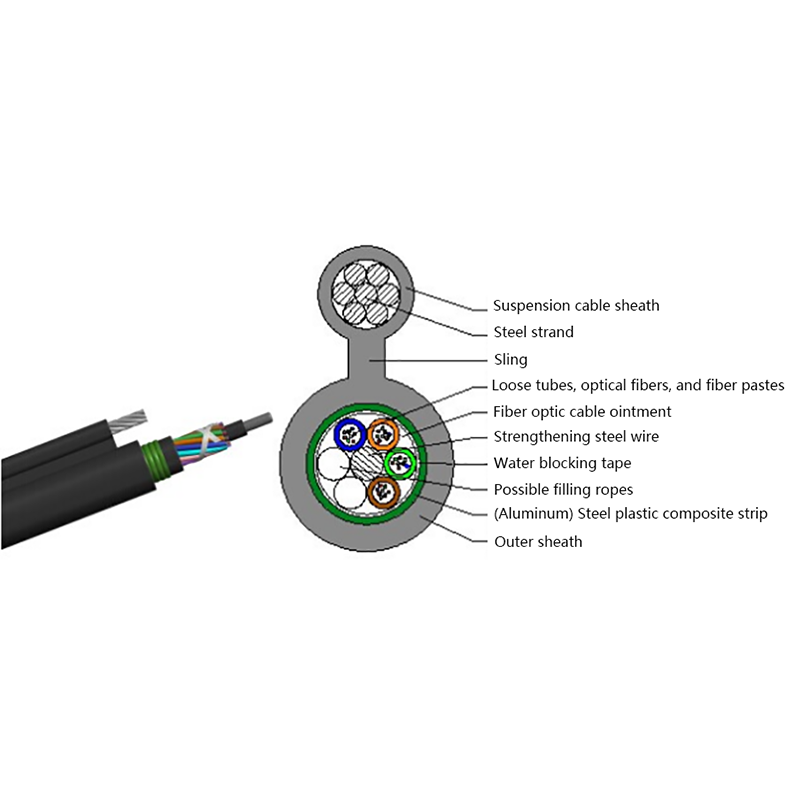
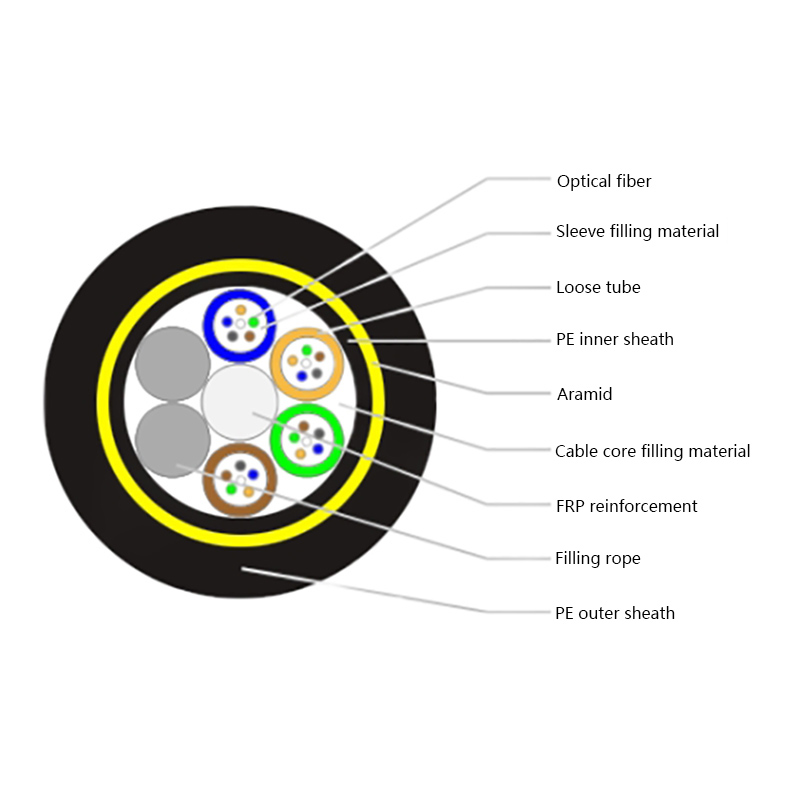
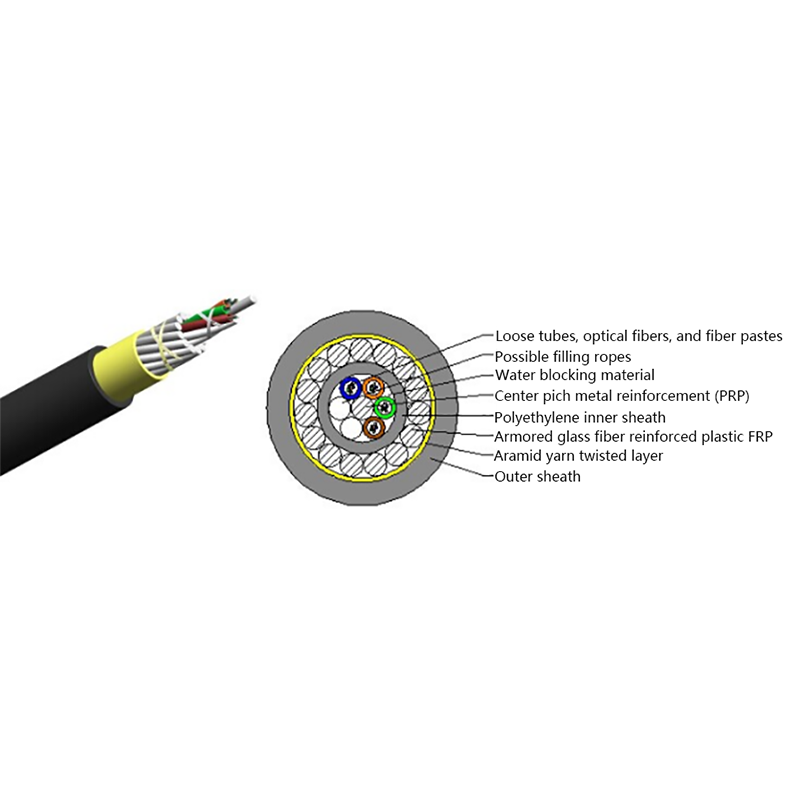
Copper and high voltage do not mix: induced currents, ground loops and lightning create safety and equipment risks along power lines, railways and substations. All-dielectric fiber designs solve the problem entirely — ADSS cable hangs on transmission towers with no metallic strength member, while OPGW doubles as both the overhead ground wire and the communication medium of the line itself.
The comparison stops being an either/or decision when a remote device needs power and data in the same trench. CCTV nodes along highways, toll gates, base-station sites and industrial sensors all face this problem. An optoelectronic composite cable places copper conductors for power alongside fibers for data under one sheath, so a single installation delivers electricity and connectivity together and cuts trenching and civil-works cost substantially. Constructions such as the GYTS composite type are built for exactly this duty.
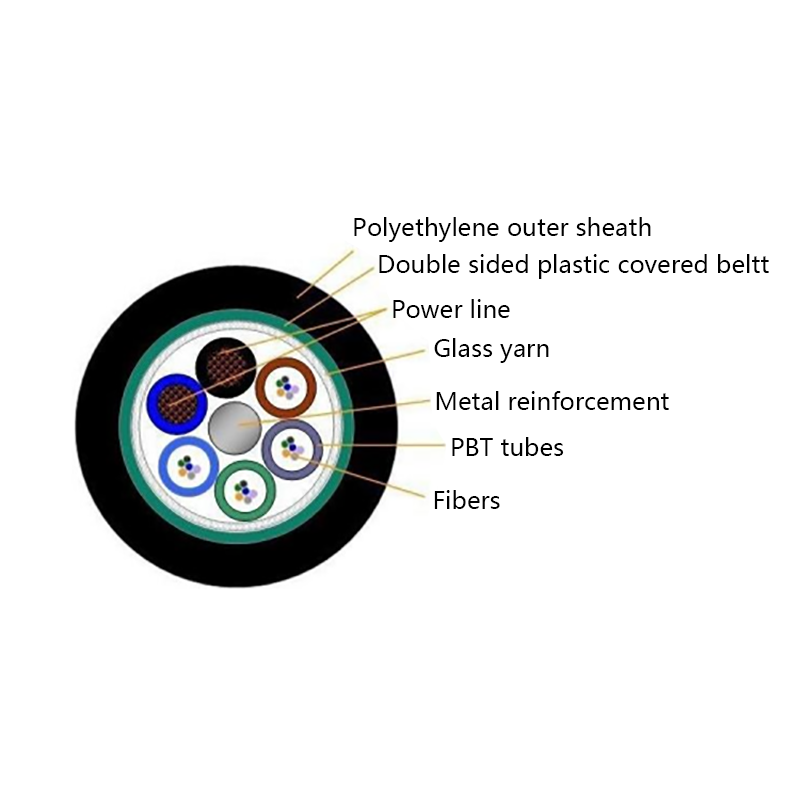 GYTS+2×1.5mm² Optoelectronic Composite Power-Fiber CableFor remote devices needing power and data in one trench, this composite cable pairs copper conductors with fibers under a corrugated steel-armored sheath, simplifying installation for CCTV nodes, toll gates and industrial sensors.View Product →
Run each candidate link through these six questions before committing to a medium:
If the trade-offs still feel close for a specific route, the detailed fibre optic cable vs copper cable guide in our news center walks through the decision scenario by scenario, and you can browse the complete range of Hawell fiber optic cable products to match each construction to your project.

Request for a call today

 Login
Custom Optical Cables Manufacturers
Login
Custom Optical Cables Manufacturers