


 English
 русский
 Español
 عربى
عربى 中文简体
中文简体

What Materials Are Fiber Optic Cables Made Of? A Complete Guide
Content
The Core Materials Inside a Fiber Optic Cable
Fiber optic cables are made primarily of silica glass (SiO₂), a highly purified form of silicon dioxide. This glass forms the two innermost layers of every optical fiber: the core and the cladding. The core is the central strand through which light travels, while the cladding surrounds it with a slightly lower refractive index to keep light confined through a principle called total internal reflection.
The glass used in fiber optics is far purer than ordinary window glass. Standard silica glass contains impurities that would scatter or absorb light over distances of meters. Fiber-grade silica, by contrast, achieves attenuation rates as low as 0.2 dB/km, enabling signals to travel tens of kilometers before requiring amplification.
In some applications—particularly short-range or consumer-grade cables—the core is made of plastic optical fiber (POF), typically polymethyl methacrylate (PMMA). Plastic fiber is more flexible and less expensive to terminate, though it carries significantly higher signal loss (around 100–200 dB/km), limiting it to distances under 100 meters.
Protective Layers: Coatings, Buffers, and Jackets
Bare glass fiber is fragile. A series of protective layers encases it to ensure mechanical durability and environmental resistance:
- Acrylate coating — The first layer applied immediately after drawing the glass fiber. This UV-cured polymer coating (typically 250 µm in diameter) protects against microbending and moisture absorption without affecting optical performance.
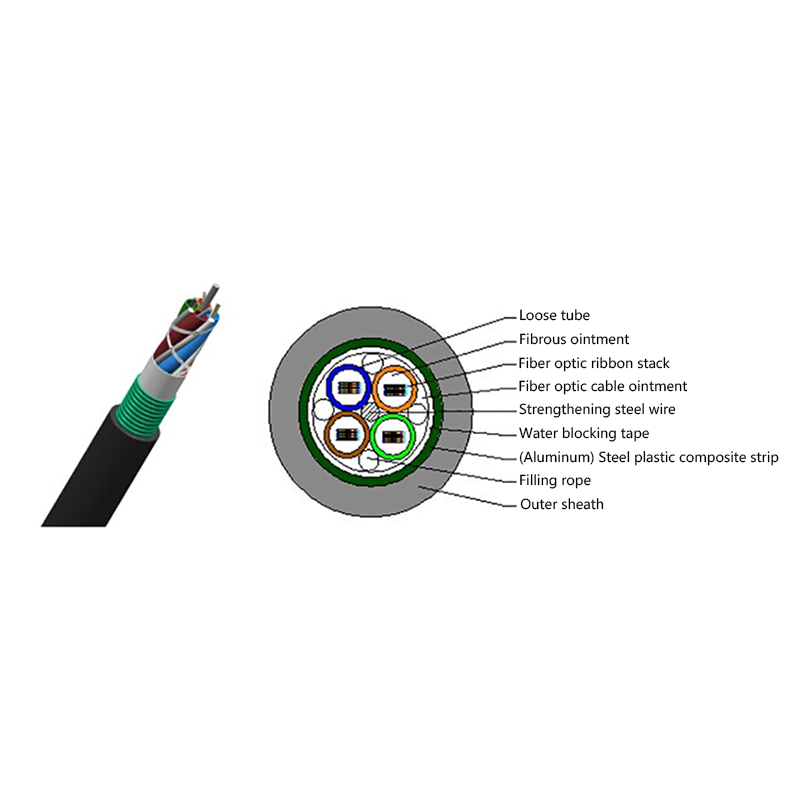
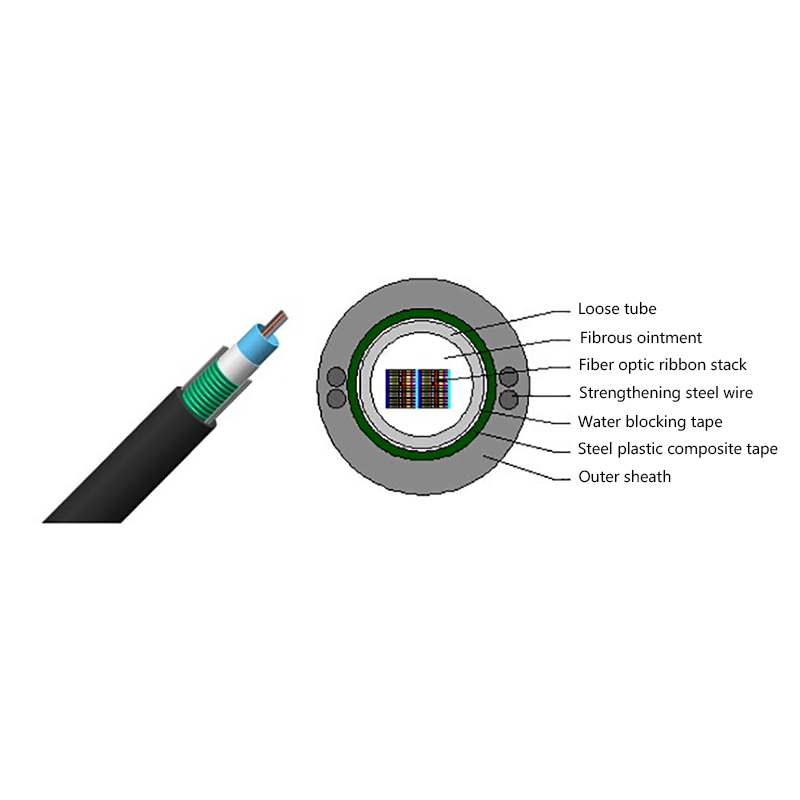
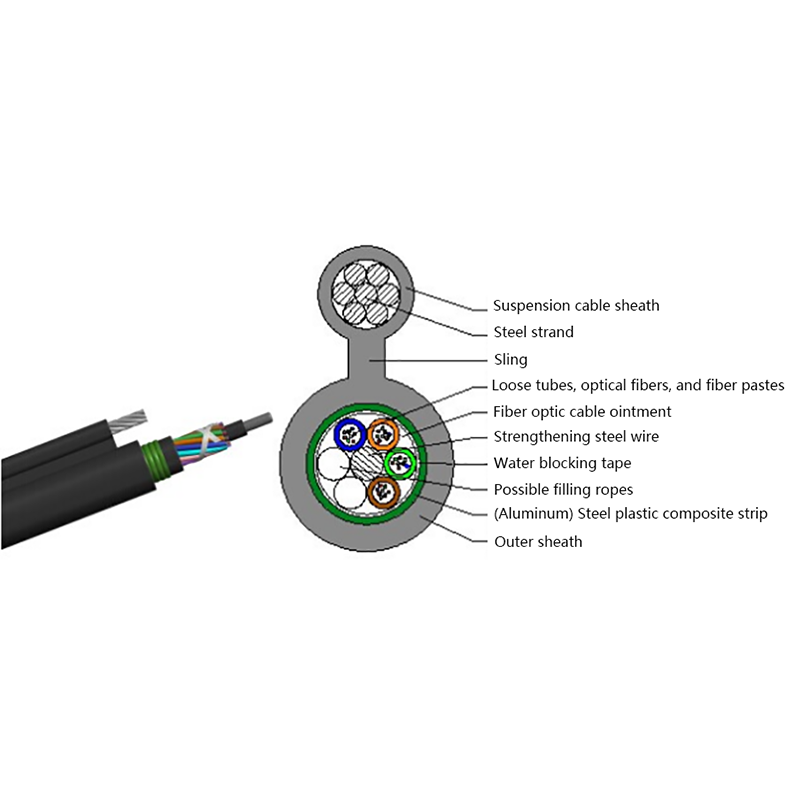
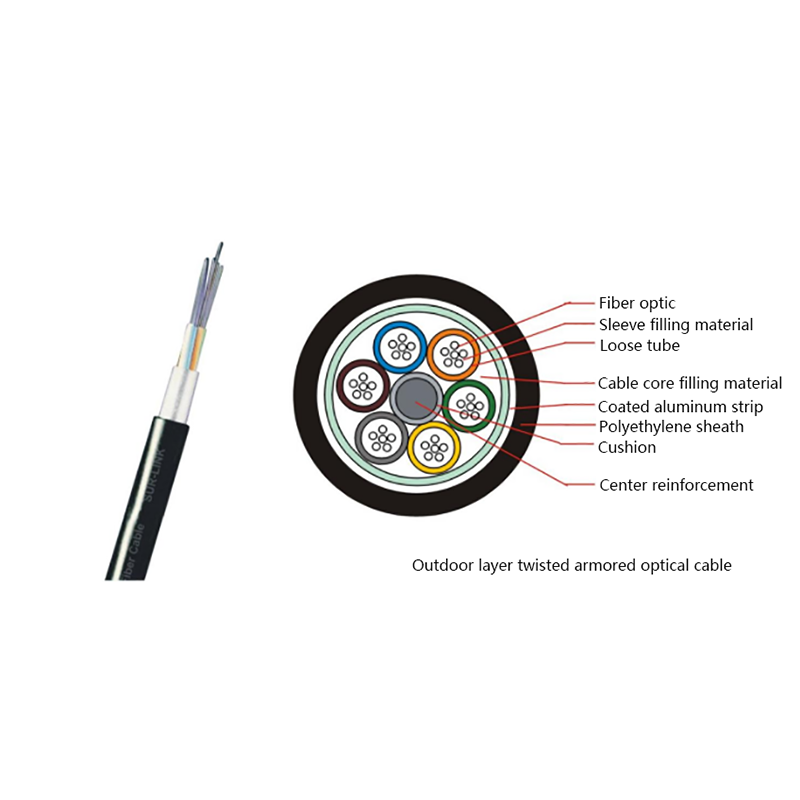
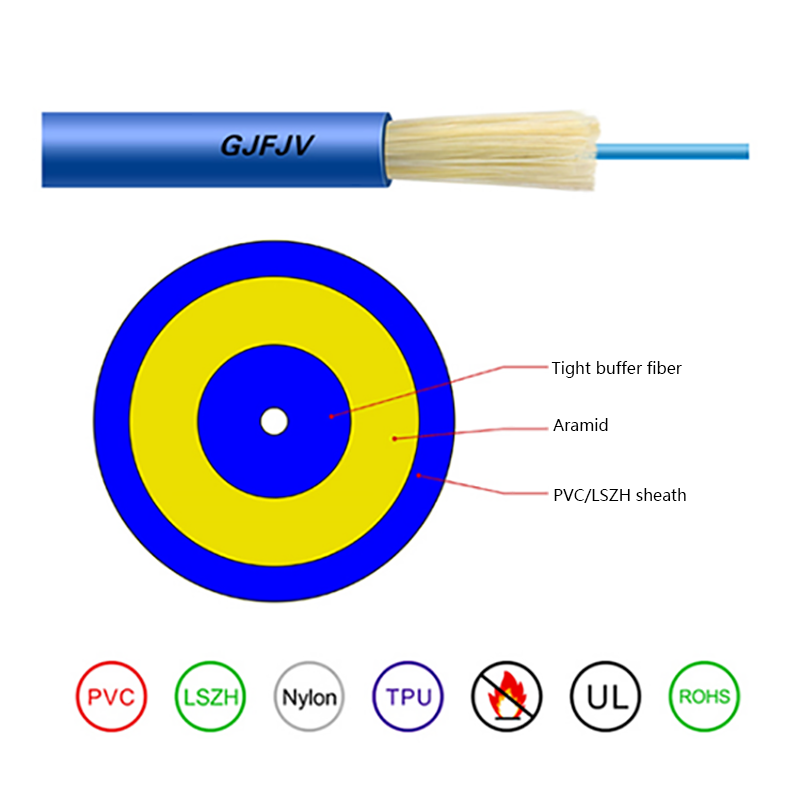
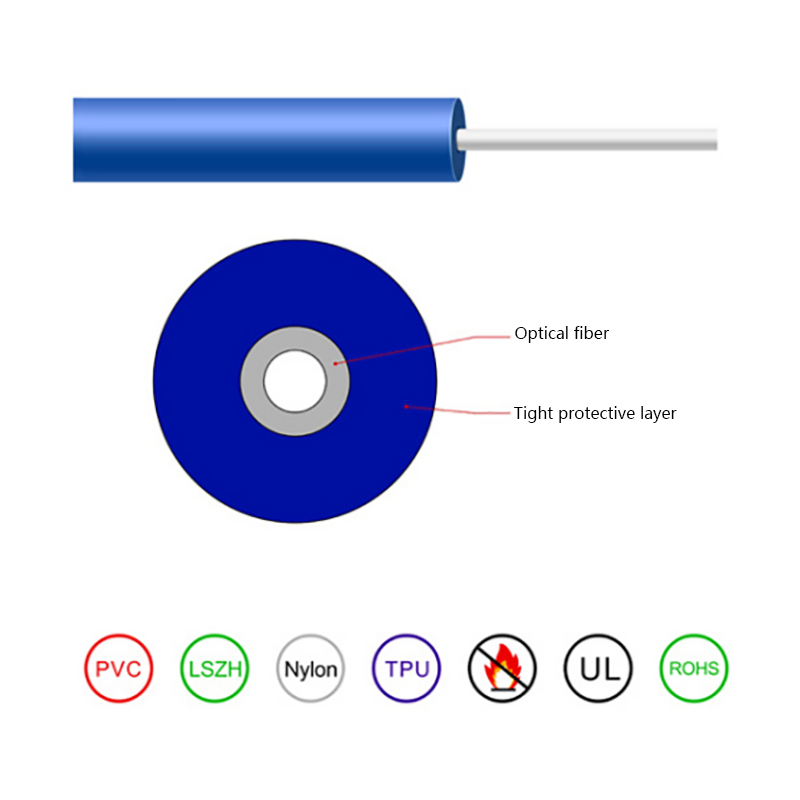
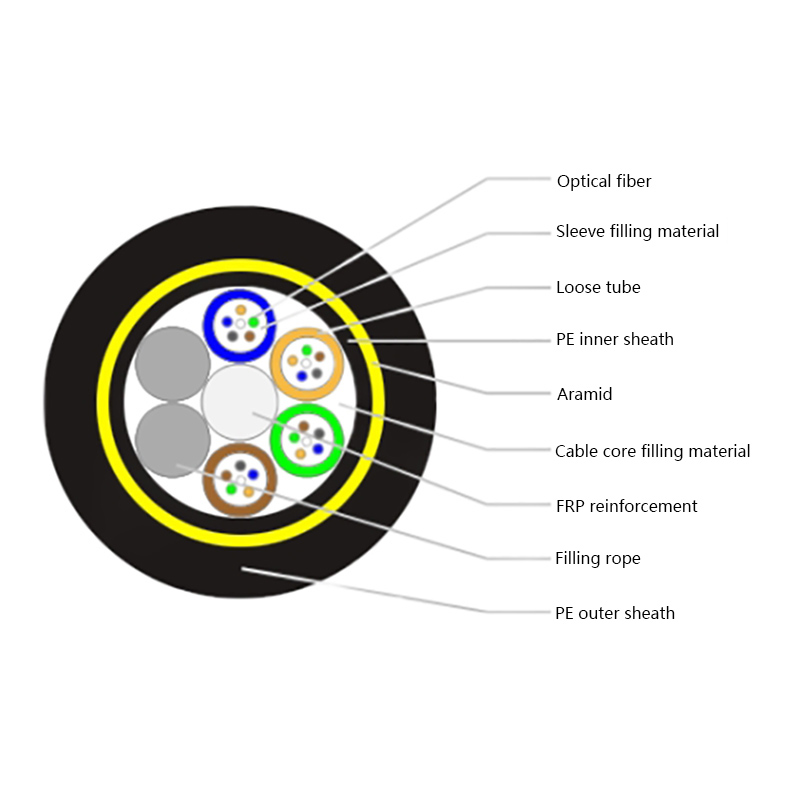
- Tight buffer or loose tube — The acrylate-coated fiber is either tightly encased in a PVC or nylon buffer (tight-buffered design) or loosely placed inside a gel-filled plastic tube (loose-tube design). Loose-tube construction is standard for outdoor cables as it isolates the fiber from tensile stress and temperature fluctuations.
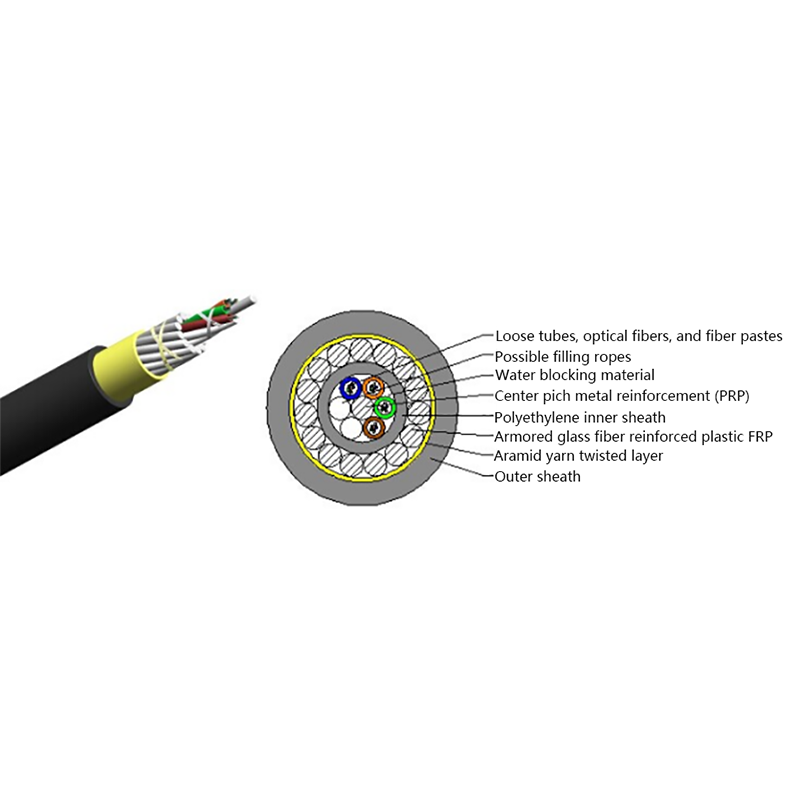
- Strength members — Aramid fibers (sold under trade names such as Kevlar) or fiberglass rods are woven or laid longitudinally inside the cable to absorb tensile loads during installation, preventing the glass fiber from stretching or breaking.
- Outer jacket — The final sheath is typically made of polyethylene (PE) for outdoor cables or PVC / LSZH (Low Smoke Zero Halogen) compounds for indoor use. LSZH materials are increasingly required in building codes because they emit minimal toxic gas when exposed to fire.
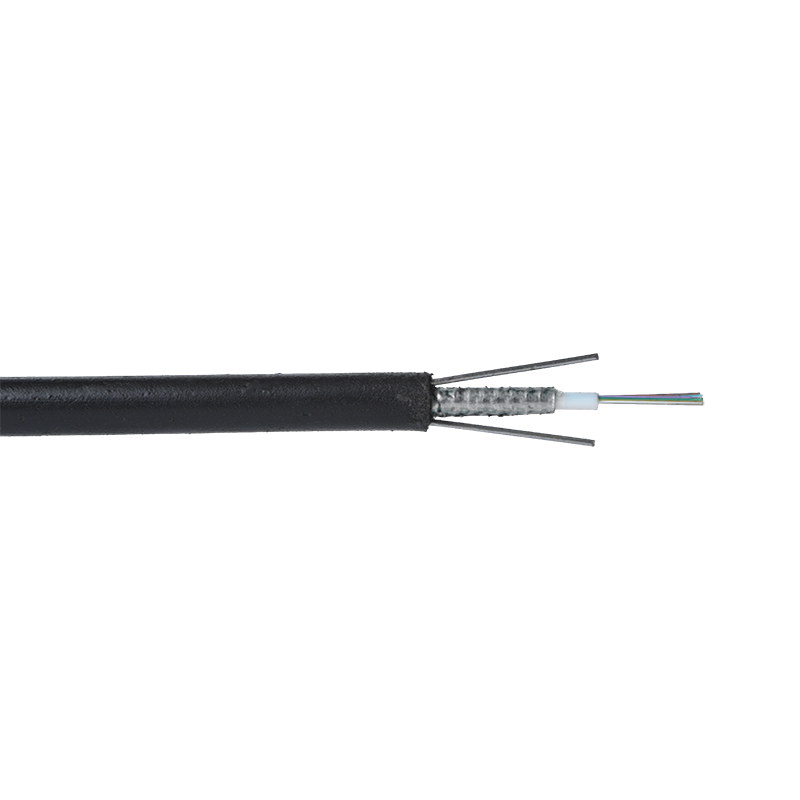
Armored cables add a corrugated steel or aluminum tape layer beneath the jacket for rodent resistance and crush protection in direct-burial or industrial environments.
Glass vs. Plastic: How the Choice of Material Affects Performance
| Property | Silica Glass Fiber | Plastic Optical Fiber (POF) |
|---|---|---|
| Core material | Purified SiO₂ | PMMA or polystyrene |
| Typical attenuation | 0.2 – 3 dB/km | 100 – 200 dB/km |
| Maximum practical distance | Hundreds of kilometers | Up to ~100 m |
| Flexibility | Moderate (brittle if overbent) | High |
| Relative cost | Higher | Lower |
| Typical applications | Telecom, data centers, CATV | Automotive, consumer AV, short-link industrial |
A third category—hard-clad silica (HCS) fiber—uses a glass core with a hard plastic cladding. It bridges the gap between all-glass and all-plastic designs, offering lower loss than POF while tolerating larger bend radii than standard single-mode glass fiber. HCS fiber is common in medical and sensing instruments.
Specialty Dopants That Fine-Tune Optical Properties
Pure silica is not the whole story. Manufacturers introduce small concentrations of dopant materials into the core or cladding glass to control the refractive index profile—and therefore how light propagates:
- Germanium dioxide (GeO₂) — Added to the core to raise its refractive index relative to the cladding. GeO₂ doping is standard in both single-mode and multimode telecom fibers.
- Fluorine (F) or boron trioxide (B₂O₃) — Reduces the refractive index and is used in the cladding, or in depressed-cladding single-mode designs that improve cutoff wavelength performance.
- Erbium (Er³⁺) — Erbium-doped fiber amplifiers (EDFAs) incorporate erbium ions into the glass matrix. When pumped with a 980 nm laser, erbium amplifies 1550 nm signals directly in the optical domain—the foundation of long-haul WDM transmission systems.
- Phosphorus pentoxide (P₂O₅) — Raises the refractive index and lowers the glass transition temperature, making fiber easier to splice and fuse-process at lower temperatures.
The precise dopant profile, applied during the chemical vapor deposition (CVD) manufacturing process, determines whether the finished fiber behaves as single-mode (SMF)—guiding one light path for maximum bandwidth—or multimode (MMF)—guiding many paths for shorter, lower-cost links.
How the Manufacturing Process Shapes Material Quality
The exceptional purity of fiber optic glass is achieved through vapor-phase deposition processes rather than conventional glass melting. The two dominant methods are:
- Modified Chemical Vapor Deposition (MCVD) — Dopant-laden gases flow through a rotating silica tube. Heat from an external torch causes the gases to react and deposit glassy soot on the inner wall. The tube is then collapsed into a solid preform rod.
- Outside Vapor Deposition (OVD) — Soot is deposited on the outside of a rotating mandrel, producing a porous preform that is later sintered into clear glass. OVD is preferred for high-volume single-mode fiber production.
The resulting preform—typically 1–2 meters long and 10–15 cm in diameter—is then drawn in a fiber-drawing tower at temperatures above 2,000 °C. The preform softens and is pulled into a continuous fiber strand just 125 µm in diameter (about the width of a human hair) at drawing speeds exceeding 2,000 meters per minute. Inline measurement systems verify diameter, coating concentricity, and attenuation in real time before the fiber is spooled.
This tightly controlled manufacturing chain—from raw SiCl₄ precursor gas to finished cable—is what allows fiber optic glass to achieve the extraordinary optical clarity that no conventional material can match.
Related Products
-
Optical Phase Conductor OPPC Cable
-
GYXTW Central Tube Armored Outdoor Optical Cable
-
Fiber Optic Patch Cables
-
OPGW Optical Fiber Composite Overhead Ground Wire
-
GYDTA(S) Layer Stranded Optical Fiber Ribbon Cable
-
GYDXTW Center Tube Outdoor Optical Fiber Ribbon Cable
-
GYTC8A (S) Outdoor layer Stranded 8-shaped Self-Supporting Optical Cable
-
GYTA Layer Stranded Aluminum-Polyethylene Bonded Sheathed Outdoor Optical Cable
-
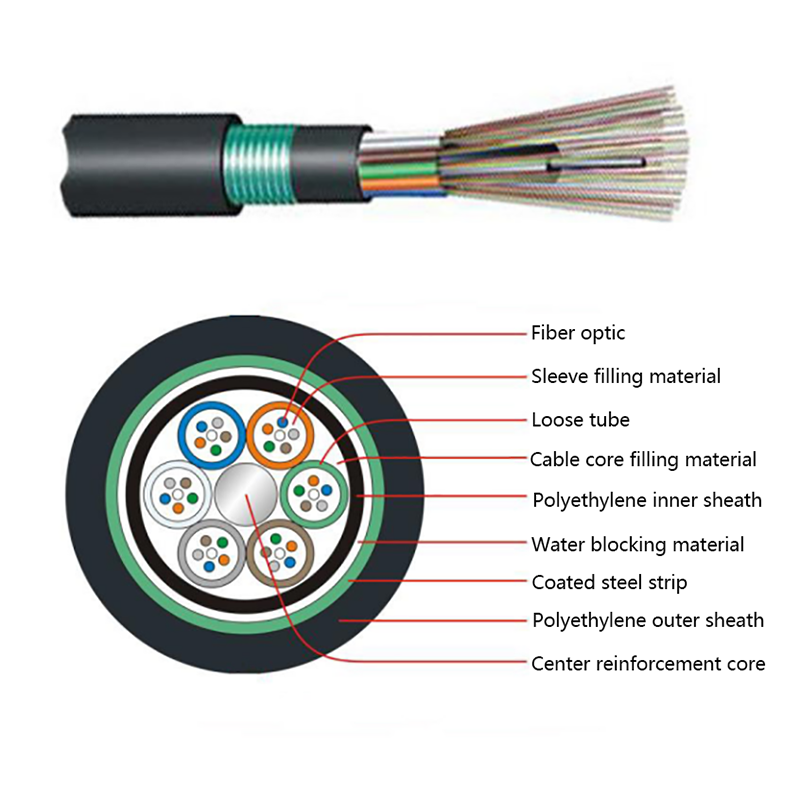
GYTY53 Layer-Stranded PE Inner Sheathed Steel Tape Armored Outer Sheath Optical Cable
-
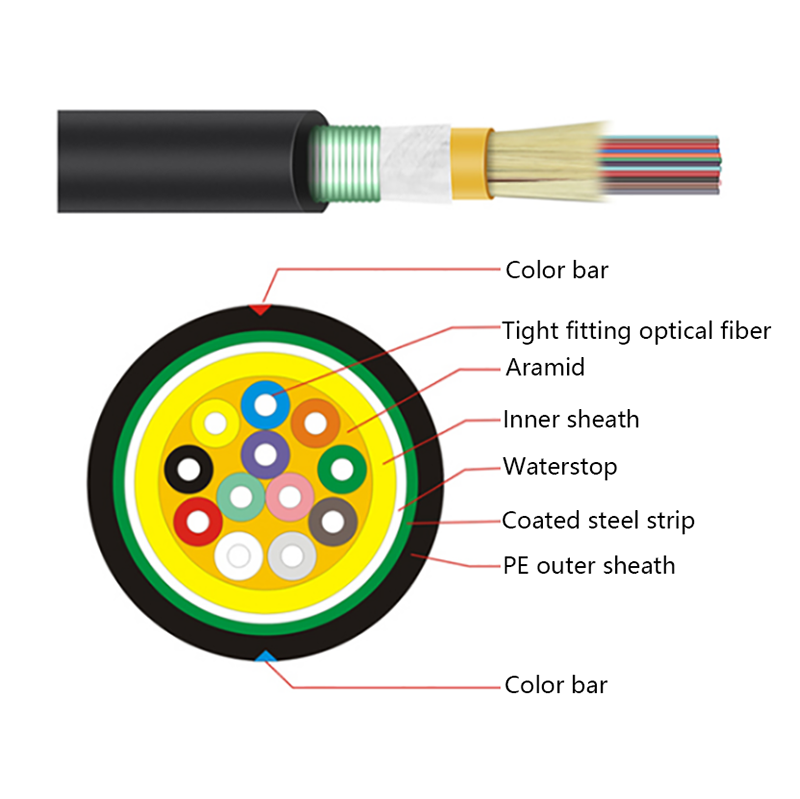
GJFJH53 Indoor Bundled Steel Tape Armored Optical Cable
-

GJPFJV GJFJHV Indoor Branch Optical Cable
-
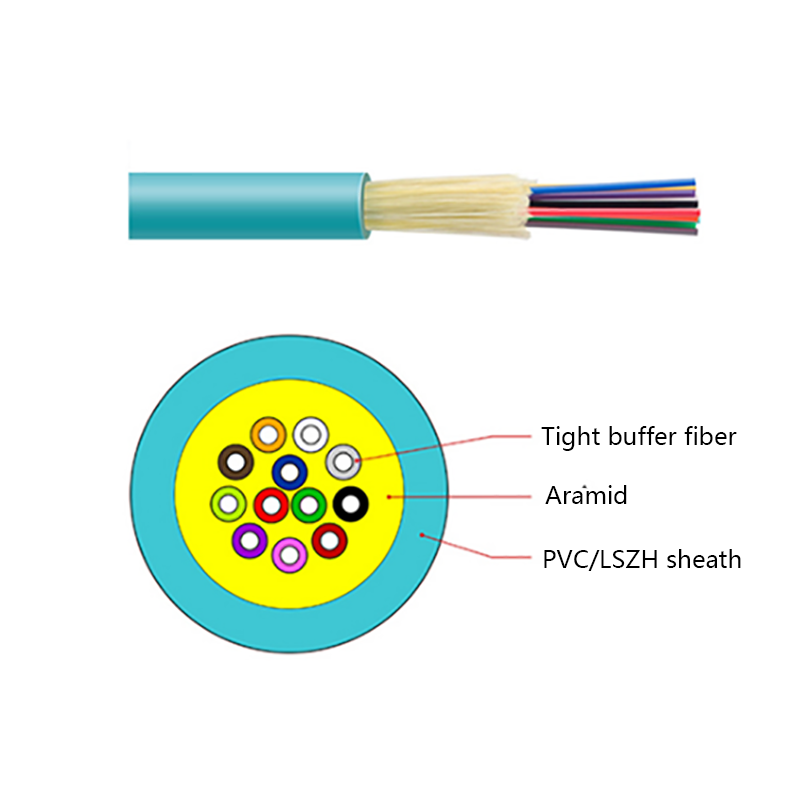
GJFJV Indoor Single Bundle Fiber Optical Cable
-
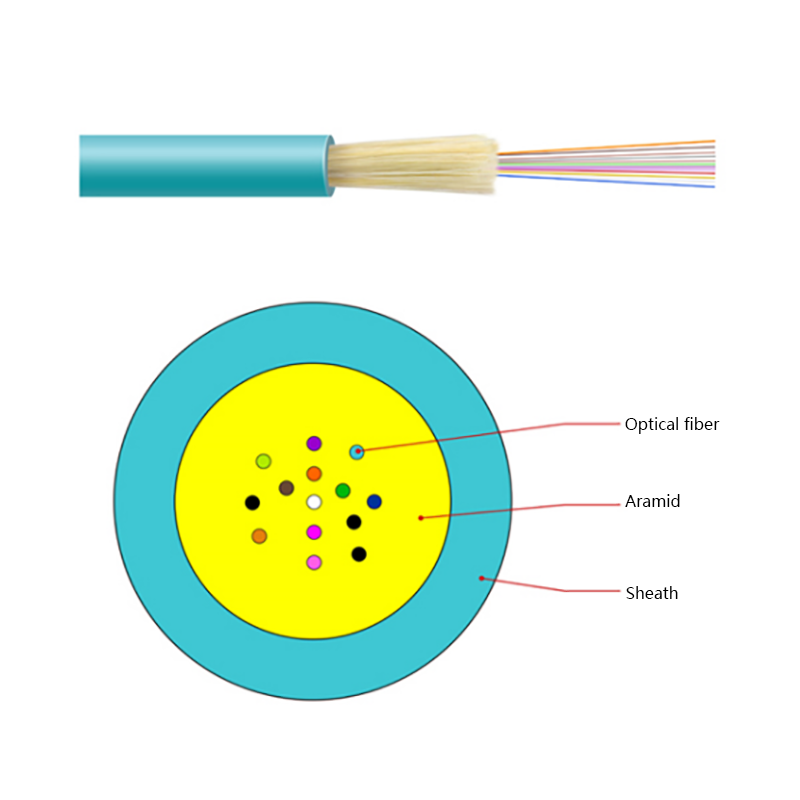
GJFV Indoor Mini Bundle Fiber Optic Cable
-
GJFJV Indoor Single Core Jumper Wire Optical Cable
-
Indoor Tight-Buffered Fibre Optic Cable
-
ADSS—All-Dielectric Self-Supporting Optical Cable
-
Anti-Squirrel ADSS Optical Cable
-
Non-metallic optical cable
Looking For Bussiness Opportunity?
Request for a call today

- Tel: +86-139-6297-6666
- Whatsapp: +86-13962991888
- E-mail: [email protected] / [email protected]
- Add: No.18, Xinjing Road, Nantong Economic and Technological Development Zone, Jiangsu Province, China
Products
Message
Coprright 2023 Jiangsu Hawell Optoelectronic Technology Co., Ltd. All Rights Reserved
 Login
Custom Optical Cables Manufacturers
Login
Custom Optical Cables Manufacturers
Login
Custom Optical Cables Manufacturers